
Anderson County Clerk of Court
The Anderson County Clerk of Court is C. Reena Thomason. The South Carolina Judicial Branch reports that Governor Henry McMaster appointed her on December 16, 2022, after she had worked in the office since 2005. The county clerk page adds that she served as Chief Deputy Clerk of Court beginning in 2014 and was appointed to complete the unexpired term of the late Richard A. Shirley. That office history matters for Anderson County Clerk of Court records because the clerk is not a general county archive. The office is the record custodian for General Sessions, Common Pleas, and Family Court proceedings.
The clerk's role is tied to the Circuit Court and Family Court record system at the active courthouse. The office keeps the filed pleadings, orders, docket events, judgments, criminal case papers, family case filings, jury process, and court financial records that arise in those courts. Probate Court, Magistrate Court, Municipal Court, the Sheriff's Office, and federal court each have separate record paths. When a request asks for a filed court order, a certified decree, or a Circuit Court case file, the Anderson County Clerk of Court is the right starting point.
The Anderson County Public Defender page is one of the local sources tied to clerk counter work because public defender applications and processing fees move through the courthouse process.
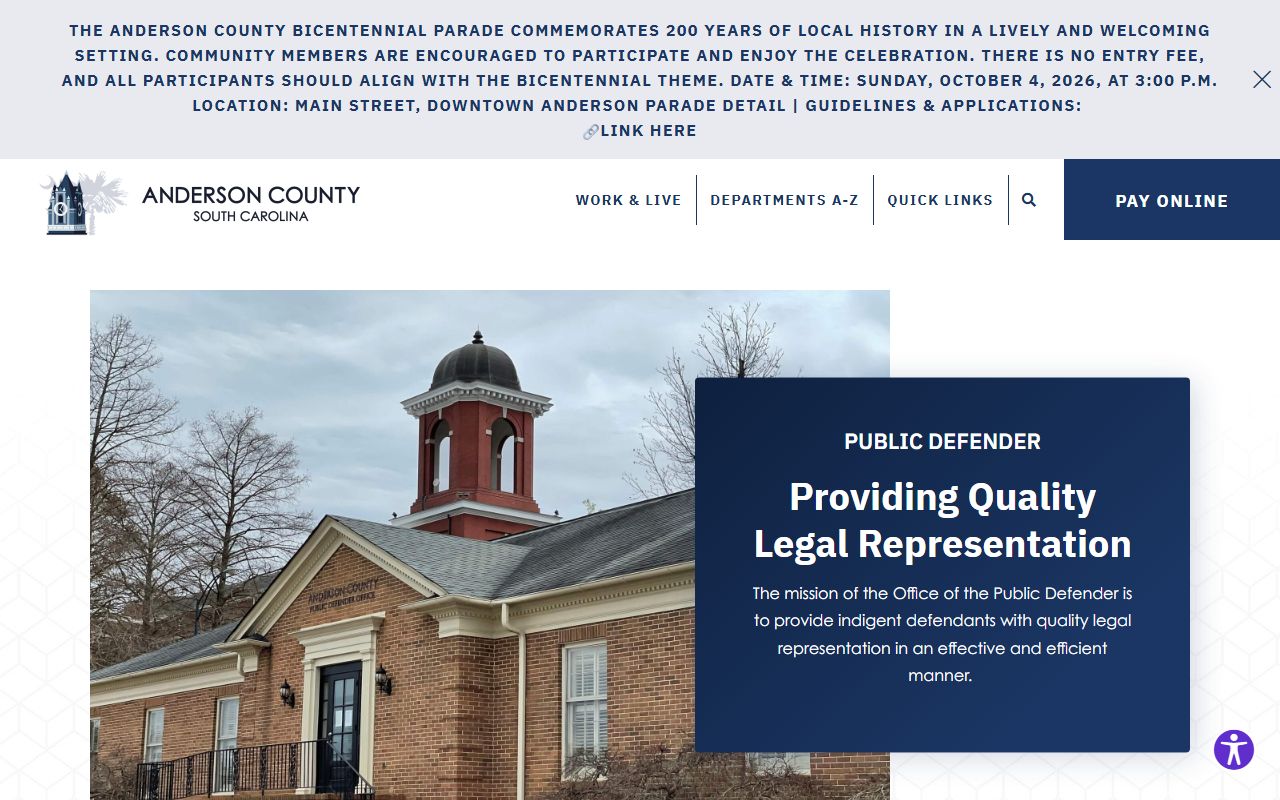
That connection shows how clerk services often intersect with criminal defense, filing fees, and court status questions even when another county department is also involved.
Anderson County Clerk of Court
Clerk: C. Reena Thomason
100 South Main Street
Anderson, SC 29624
Mailing: Post Office Box 8002, Anderson, SC 29622
(864) 260-4053
cthomason@andersoncountysc.org
Fax: (864) 260-4715
Monday-Friday, 8:30 a.m.-5:00 p.m.
Anderson County Clerk Records Held
The clerk maintains records for the two sides of Circuit Court and for Family Court support work. Court of Common Pleas files cover civil lawsuits, judgments, liens, foreclosures referred to the Master-in-Equity, motions, orders, and civil appeals from lower courts. General Sessions files cover felony and higher-level criminal case records after prosecution moves into Circuit Court, including indictments, filed charges, bonds, pleas, docket actions, dispositions, and sentencing orders where those items are public.
Family Court records handled through the clerk include divorce, custody, visitation, support, alimony, equitable division, adoption, juvenile, name change, and protection-order filings. Access is more limited for many family and juvenile matters. The Anderson County Clerk of Court also collects fees, fines, and costs imposed by Circuit Court, collects and disburses court-ordered child support and alimony, summons jurors, manages Grand Jury process, supports judges and the 10th Circuit Solicitor, issues Rules to Show Cause in Family Court when orders are not followed, files Orders of Protection, and transmits those orders to local law enforcement.
The South Carolina Juvenile Justice Code is an important source for Anderson County Clerk of Court records because juvenile court records are not treated like ordinary public civil files.
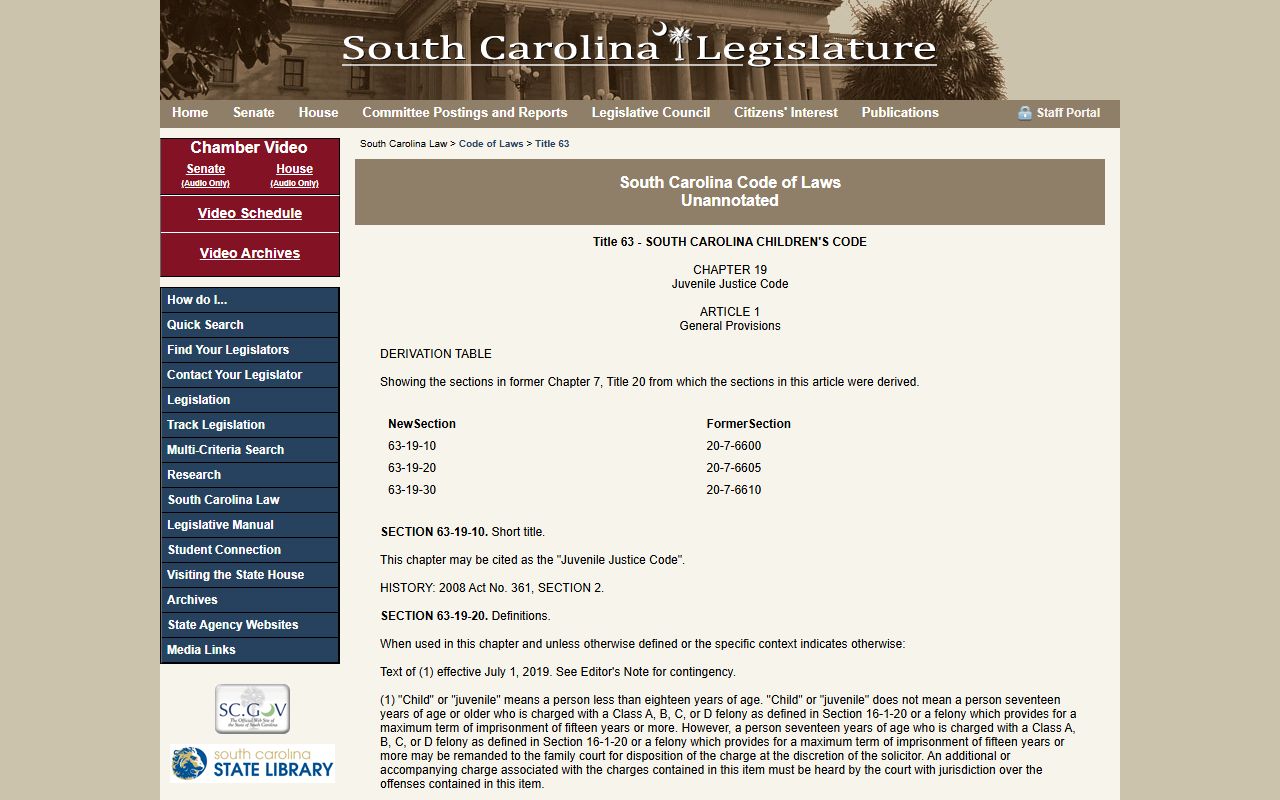
That statute explains why a name search may not show a juvenile matter even when the courthouse has a restricted file or docket entry.
Find Anderson County Clerk Records
Most public trial-court case lookups begin with the Anderson County Public Index or the South Carolina Judicial Branch Case Records Search. Those channels cover Common Pleas, General Sessions, Magistrate, and participating Municipal Court records. The Judicial Branch notes that cookies and JavaScript must be enabled and that some browsers need pop-up exceptions for case details. Family Court uses the separate Family Court Public Portal, and upcoming hearing or roster questions may need the Court Roster Search.
Online access is only the first path. The clerk counter remains the fallback for certified copies, older files, file images not shown online, sealed or restricted status questions, and records that need a clerk's certification seal. A mail request should identify the case number if known, party names, case type, document requested, whether certification is needed, return address, and phone or email. If the request is for county administrative records rather than a court file, the county FOIA form goes to the Anderson County Public Information Office instead.
- Search the Public Index or Family Court Public Portal first to find the case number, court, party names, and docket date.
- Decide whether the copy must be certified. Court use, title work, benefits, and appeal records often require certification.
- Contact the Anderson County Clerk of Court or visit the counter with the case details and document names.
- Ask the clerk to confirm the copy cost and whether the file is public, redacted, sealed, or partly restricted.
- For mail requests, include the case details, return address, contact information, and payment instructions confirmed by the office.
Certified Anderson County Clerk Copies
A certified copy is a clerk-issued copy that bears official certification from the court record custodian. Plain online printouts can be useful for case tracking, but they do not replace a certified decree, order, judgment, or filed document when another court, agency, lender, employer, or title office requires proof. Anderson County Clerk of Court records that commonly need certification include divorce decrees, final orders, civil judgments, criminal dispositions, sentencing orders, and filed protection orders.
Certified-copy requests should stay narrow. Ask for the exact document when possible, not the whole file. A case number is the best identifier. If the case number is unknown, party names, filing year, court type, and document type help the clerk locate the file. Older records and restricted files may take more time than a current public docket. The clerk page reviewed for Anderson County did not publish a copy or certification fee schedule, so payment amounts should be confirmed with the office before mailing funds.
The South Carolina domestic-relations statutes support local divorce and family case context, but the filed Anderson County order or decree is requested through the clerk, not through the statute page.
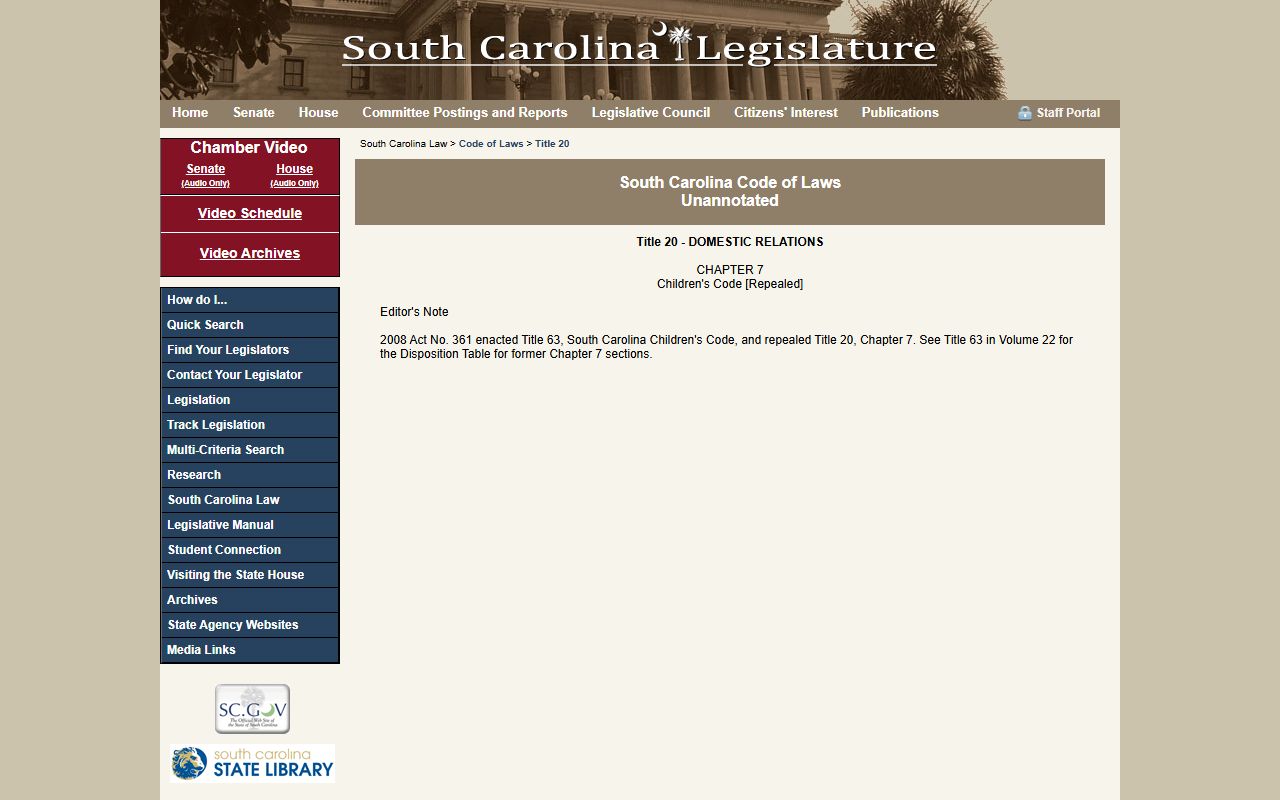
Domestic-relations law may define the case type, while the clerk's certified copy proves what the Anderson County Family Court actually entered.
Anderson County Clerk FOIA Rules
Anderson County record requests split into two legal channels. South Carolina FOIA applies to public records of public bodies, including many county administrative records. The county FOIA form asks for the information requested and routes through the Public Information Office. Court records are different. Judicial-branch records are governed by Rule 610, SCACR, and filed court records often route through the Clerk of Court or the Judicial Branch access systems instead of the county FOIA office.
This distinction prevents misrouting. A request for a county policy, administrative email, or non-court county document may fit the county FOIA form. A request for a General Sessions sentencing order, Common Pleas judgment, Family Court decree, or certified court filing belongs with the clerk or the court access process. FOIA can still matter for Sheriff's Office records, incident reports, jail records, and other law-enforcement files that are not filed court documents, but those are not the same thing as Anderson County Clerk of Court records.
Note: Use Rule 610 or the clerk for judicial records, and use FOIA for county or sheriff records outside the court file.
Anderson County Clerk Form Fields
The county FOIA form is still relevant when a requester needs a non-court county public record or when a court-related issue points to an administrative county office rather than a filed case document. The form should not be used as a substitute for a precise certified-copy request to the clerk. For court-file requests, a written letter with the case number, party names, case type, document requested, certification need, return address, and phone or email is more useful than a broad FOIA description.
| Field Label | Type | Required | Notes |
|---|---|---|---|
| Date of Request | Date or text | Yes | Date the request is made. |
| Name | Text | Yes | Requester name. |
| Street Address | Address | Yes | Street, city, state, and ZIP fields are shown. |
| Phone | Text | Recommended | Helps staff clarify the request. |
| Text | Recommended | Used for contact or delivery when available. | |
| Information Requested | Text area | Yes | The form asks for as much detail as possible. |
| Signature | Signature | Yes | Requester signs the form. |
| Internal Fields | Office use | Office use | Received date, employee receipt, response due, and response mailed. |
Anderson County Clerk Fees
Official Anderson County research located several court-related fees, but it did not locate a published Clerk of Court copy or certification schedule. That gap should be treated plainly. Confirm copy, certification, and mailing charges with the Anderson County Clerk of Court before sending payment. Known court-related fees from official sources are useful context because they show which payments are tied to clerk or courthouse services and which payments belong to Probate, Magistrate, or Master-in-Equity functions.
| Item | Amount or Rule | Office / Context |
|---|---|---|
| Public Defender application processing fee | $40 | Clerk's office if applicant qualifies; Family Court page notes cash only for juvenile or DSS cases. |
| Court-copy or certification fees | Not located in official sources reviewed | Confirm with Anderson County Clerk of Court before mailing payment. |
| Marriage license | $46, cash only | Probate Court, not the Circuit Clerk record counter. |
| Magistrate traffic ticket payment | Varies by citation; no personal checks | Summary Court and Public Index payment process. |
| Online ticket payment posting | May take up to 3 business days | Anderson County Magistrates payment note. |
| Master-in-Equity sale deposit | 5% of bid immediately by certified check | Foreclosure and referred equity sales. |
Anderson County Clerk Family Records
Family Court records need careful routing because the Clerk of Court supports Family Court proceedings, while South Carolina DPH handles limited vital-record products. Divorce decrees, custody orders, support orders, pleadings, and the full divorce case file are court records requested through the Anderson County Clerk of Court or Family Court access channel. DPH divorce reports are not the full case file. Probate Court handles marriage licenses, but a state marriage certificate may also be requested through DPH for eligible uses.
The South Carolina marriage statutes provide the legal setting for marriage records and licenses in Anderson County.
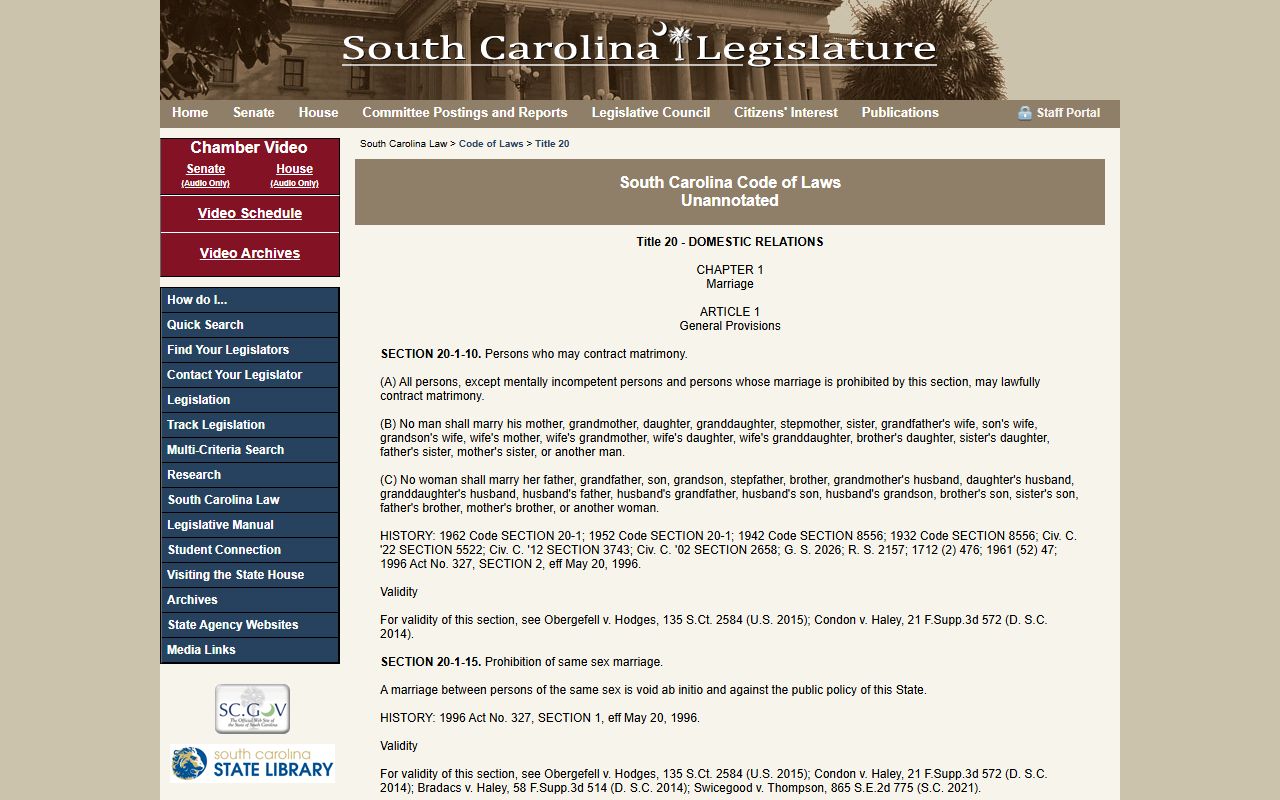
Marriage-license records route through Probate Court, while related domestic or divorce case orders route through Family Court and the clerk.
The South Carolina divorce statutes are also relevant to Anderson County Clerk of Court records because final divorce orders become filed Family Court records.
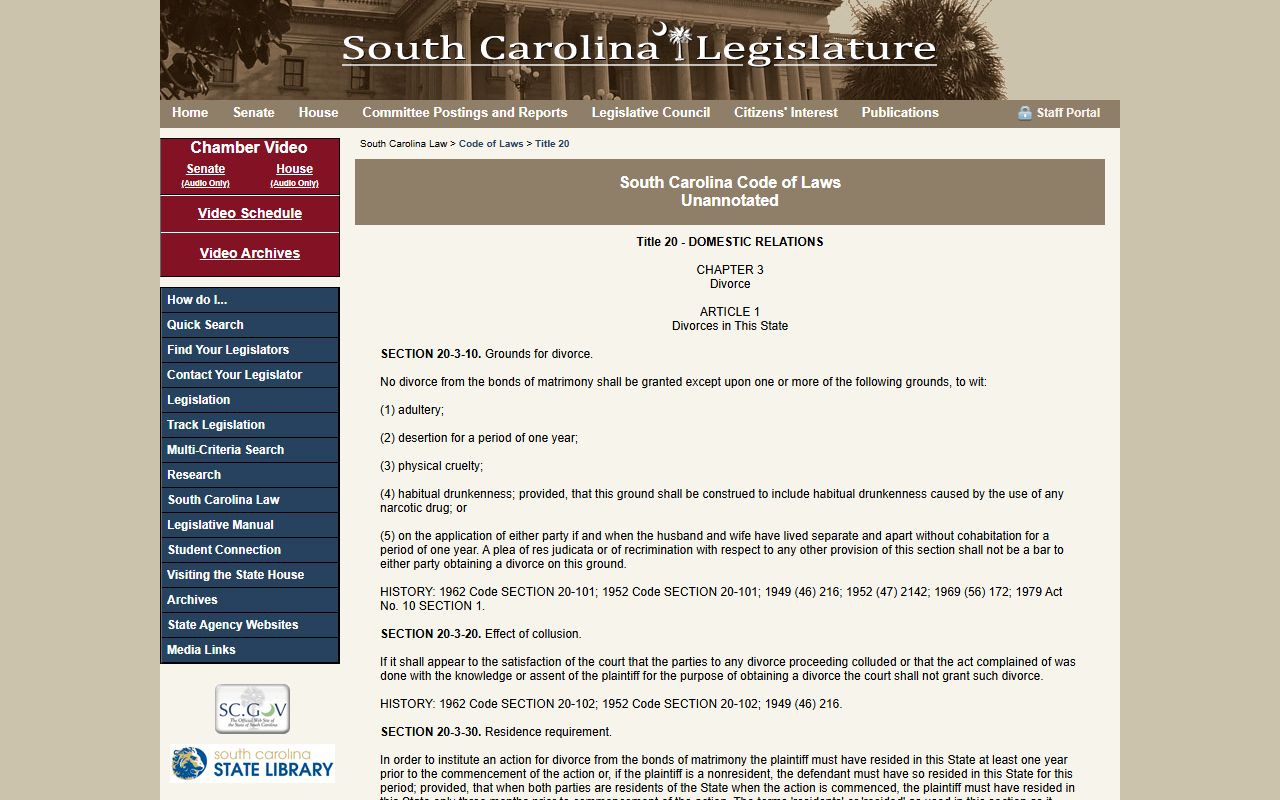
That separation helps users avoid asking DPH for a decree when the court file must be requested from the clerk.
Anderson County Clerk Request Channels
Anderson County Clerk of Court records can be searched online before a mail or counter request is made. Use the Public Index for Circuit Court and many lower-court records, the Family Court Public Portal for family matters, and Court Roster Search for hearing schedules. Then use the clerk's office for certified copies, older files, or public files that are not fully viewable online. Written requests to the clerk should use the mailing address at Post Office Box 8002, Anderson, SC 29622.
For non-court county FOIA submissions, the county form lists Anderson County Public Information Office, PO Box 8002, Anderson, SC 29622, email tbannister@andersoncountysc.org, fax 864.260.4548, and office phone 864.260.1047. For law-enforcement records outside a filed court case, the Sheriff's Office has its own FOIA process. These separate paths are useful because a person seeking a criminal case disposition may need the clerk, while a person seeking an incident report may need the sheriff.