
Anderson County Probate Records
Anderson County Probate Court serves local probate needs for decedents' estates, minors, incapacitated adults, trusts, marriage licenses, involuntary commitments, and wrongful death or survival action settlements. The court is located in the Anderson County Courthouse, and the county page links to state forms and public court records through ACPASS. Probate Judge Hon. JT Foster is listed in the research as the local probate judge.
Probate records are distinct from Circuit Court and Family Court records. A will, estate opening, inventory, accounting, guardianship petition, conservatorship matter, or commitment-related filing belongs in Probate Court when Anderson County is the proper venue. The Clerk of Court may be nearby in the same courthouse, but estate opening questions should be directed to Probate Court.
The county's Probate Court source is the Anderson County Probate Court page.
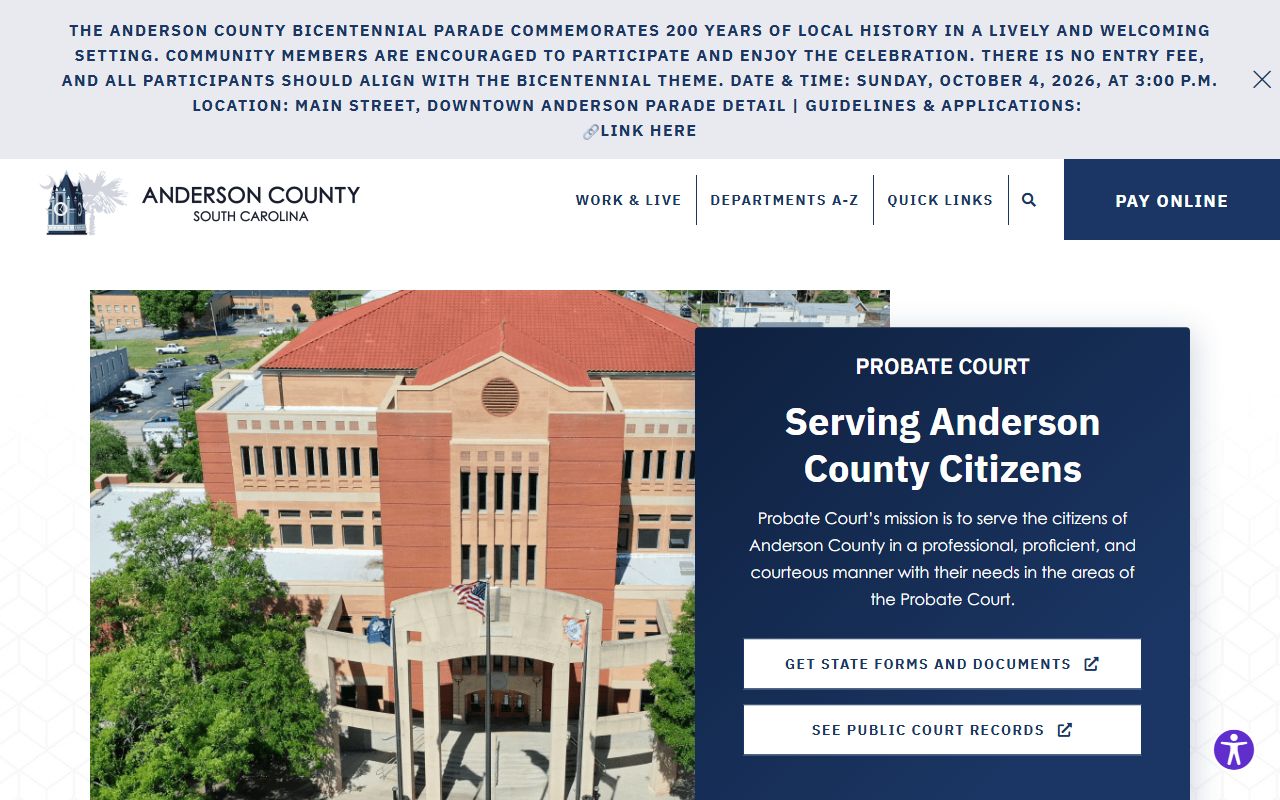
The local source confirms both the Probate Court functions and its public records access path.
Anderson Probate Terms Defined
Probate filings use terms that identify the person who died, the person asking to act for the estate, and the type of protection requested for a minor or incapacitated adult. These definitions keep the Anderson County probate record easier to read before filing or requesting a copy.
- Testator
- A person who made a will before death.
- Personal representative
- The person appointed to administer an estate, including an executor named in a will.
- Intestate
- A death without a valid will, which means South Carolina law controls heirs and appointment priority.
- Informal probate
- A process that admits a will without a hearing when the legal requirements are met.
- Formal probate
- A probate process requiring a hearing to confirm validity or appointment issues.
- Guardianship
- Authority to make health or welfare decisions for an incapacitated adult or protected person.
- Conservatorship
- Authority to manage another person's money or property.
Open Anderson County Estates
Estate opening begins with the will and death certificate when a will exists. The county research states that both should be brought to Probate Court within thirty days of death. If no will exists, the closest relative should come in person with the death certificate to open the estate. Original documents must be filed because copied or faxed documents cannot be accepted.
Anderson County is the correct Probate Court venue if the deceased was a permanent Anderson County resident, was a nonresident who held property in Anderson County, or had a right to take legal action in the county. Informal probate may be handled with an attorney or self-represented with paperwork and a judge meeting. Formal probate or formal appointment requires attorney services, summons, petition, filing fee, service on interested parties, and a hearing.
- Confirm that Anderson County is the proper probate venue.
- Gather the original will if one exists and the death certificate.
- Bring original documents to Anderson County Probate Court.
- Identify whether informal probate or a formal hearing is needed.
- Ask Probate Court which state forms or attorney filings apply to the estate.
Anderson Guardianship Conservatorship Records
Probate Court handles protection for adults who cannot make health, welfare, or financial decisions because of mental or physical impairment. A guardian may be appointed for personal health and welfare decisions. A conservator may be appointed when the adult cannot make financial decisions or manage financial affairs. If a minor receives more than $10,000, the research states that a conservator must be appointed to manage funds until the minor turns 18.
Petitions are available through the South Carolina Judicial Branch forms and documents section or in the Probate Court office. After medical and visitor reports are received, a guardian ad litem is appointed to represent the alleged incapacitated person. A hearing then determines whether the applicant should be appointed. Some medical, incapacity, and minor-related filings may not be ordinary public lookup records.
The state Probate Court overview is available from the South Carolina Judicial Branch Probate Court source.
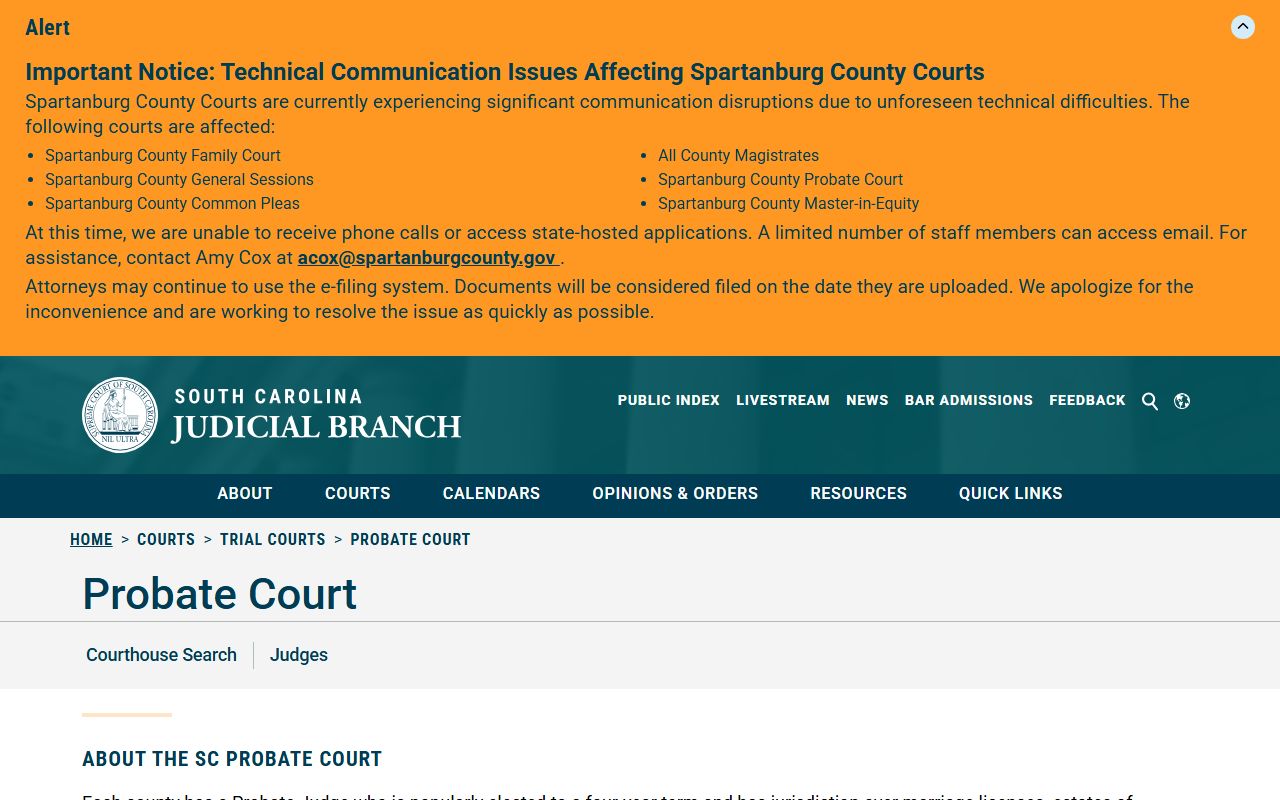
The state overview supports the local court's role in probate and protective proceedings.
Search Anderson County Probate Court
Anderson County Probate Court provides a public record channel through ACPASS, but the research notes that exact probate search fields were not accessible in the official page text. For online review, start with the Probate Court page's public records link. For older, sealed, unclear, or certification-sensitive records, use the Probate Court office by phone, in person, or written request.
A strong written request should include the estate name, decedent name, date of death, case number if known, the document requested, whether certification is needed, and the requester's return contact information. Probate Court can also be contacted for state forms and filing questions that cannot be answered by the public record index.
| Search Field | Type | Required | Notes |
|---|---|---|---|
| ACPASS / Public Records Index | Portal | Unspecified | Probate Court page links public court records through ACPASS. |
| Decedent or estate name | Text | Practical | Use for in-person or written probate requests. |
| Case number | Text | Optional | Use if known to narrow the search. |
| Date of death | Date | Optional | Helps Probate Court locate estate records. |
| Document requested | Text | Practical | Name the will, order, inventory, accounting, or letters needed. |
South Carolina Probate Code
South Carolina Probate Code supplies the legal setting for estate administration and Probate Court filings. Anderson County probate records should be read with the local court channel in mind, but statewide probate law explains many terms, appointment rules, and administration duties. The Probate Code is also important when no will exists because intestate succession and appointment priority come from state law.
The general probate provisions are published in the South Carolina Probate Code general provisions source.
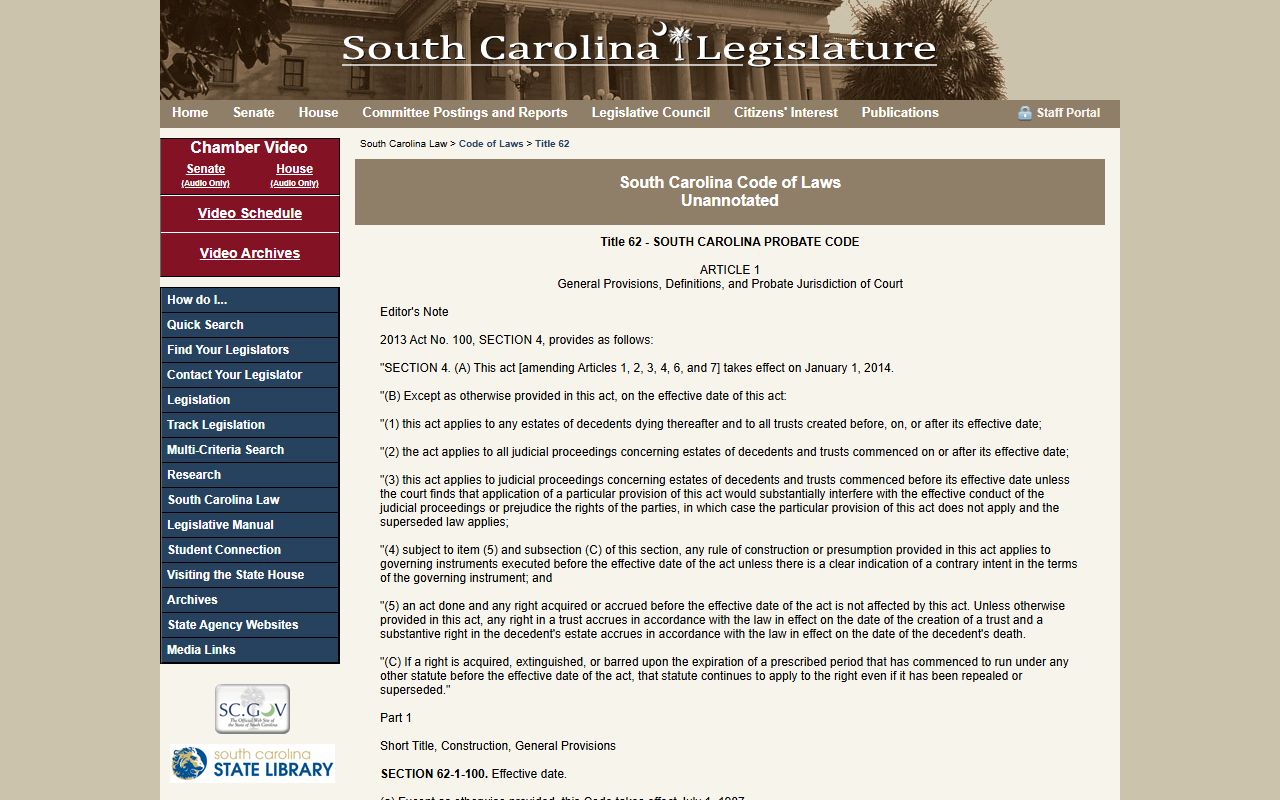
Those provisions give statewide context for local Anderson County probate filings.
Estate administration provisions are published in the South Carolina Probate Code administration source.
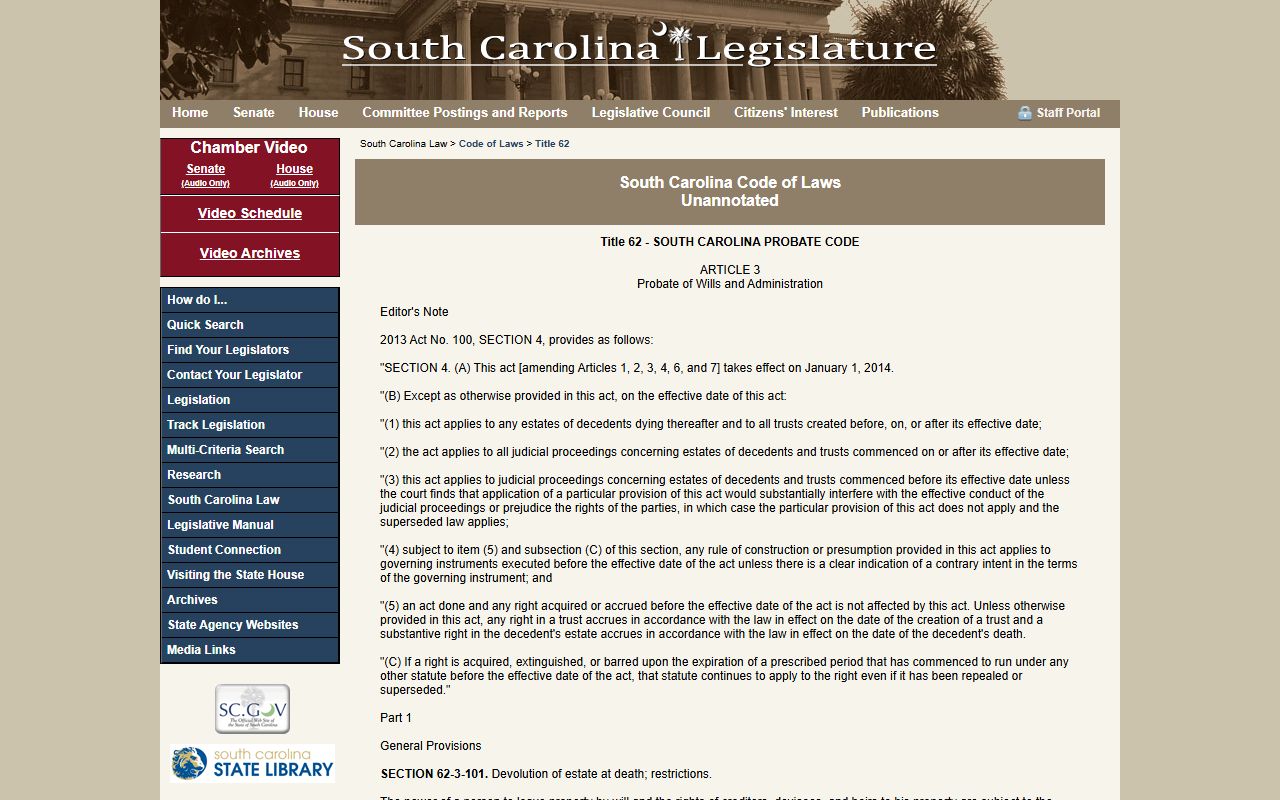
The administration source is relevant when reviewing personal representative duties and estate steps.
Anderson Emergency Commitment Instructions
Probate Court handles involuntary commitments for mental illness, alcoholism, drug addiction, and active pulmonary tuberculosis. These are not ordinary public probate search records. The research found a local instruction for emergency commitment: contact Anderson Mental Health Center first at 200 McGee Road, Anderson, SC 29625, phone 864-260-2220, and do not come to Probate Court first.
This instruction matters because commitment records involve health information and urgent safety issues. Public record channels that work for estates and wills are not a substitute for the emergency mental-health direction listed in the research. For non-emergency probate questions, use the Probate Court contact channels instead.
Emergency commitment instruction: Contact Anderson Mental Health Center first at 864-260-2220 for emergency commitment concerns. Do not come to Probate Court first.
Anderson Probate Court Fees
The research found two Anderson County Probate Court fees: $50 to start probate and $46 cash only for a marriage license. Other probate filing and copy fees were not located in the official Anderson Probate page reviewed. Because fee schedules can depend on filing type and estate value, contact Probate Court before mailing payment or asking for a certified copy.
| Item | Amount | Notes |
|---|---|---|
| Start probate | $50 | Disclosed by county probate research. |
| Marriage license | $46 cash only | Handled by Probate Court but covered in more detail on marriage records. |
| Other probate filing or copy fees | Not located in reviewed official source | Confirm with Probate Court before filing or requesting certification. |
What Anderson Probate Records Show
Estate records may show the decedent name, date of death, petition, will, proof of heirs, appointment of a personal representative, inventories, accountings, creditor notices, orders, receipts, distributions, and closing documents. Guardianship and conservatorship records may show petitions, medical or visitor reports, guardian ad litem appointment, hearing orders, and financial management authority.
| Record Type | Common Contents |
|---|---|
| Estate file | Will, death certificate reference, petition, appointment, inventory, accounting, and closing entries. |
| Guardianship | Petition, reports, guardian ad litem entry, hearing order, and authority granted. |
| Conservatorship | Financial petition, appointment order, bond or accounting data where required. |
| Trust or settlement matter | Petition, court approval, settlement order, and related filings. |
| Marriage license | License application and issuance records held by Probate Court. |
Restricted Anderson Probate Records
Not all probate material is open for the same level of public access. Mental-health commitment materials, medical reports, incapacity reports, minor guardianship or conservatorship details, and sealed filings may be restricted. South Carolina redaction rules also protect Social Security numbers, financial account numbers, driver's license numbers, minor identifiers, and similar personal data.
South Carolina DPH Vital Records is a separate state channel for vital records and not the same as Probate Court estate access. The DPH Vital Records source can help with birth, death, marriage, and divorce vital-record copy channels where state records are appropriate.
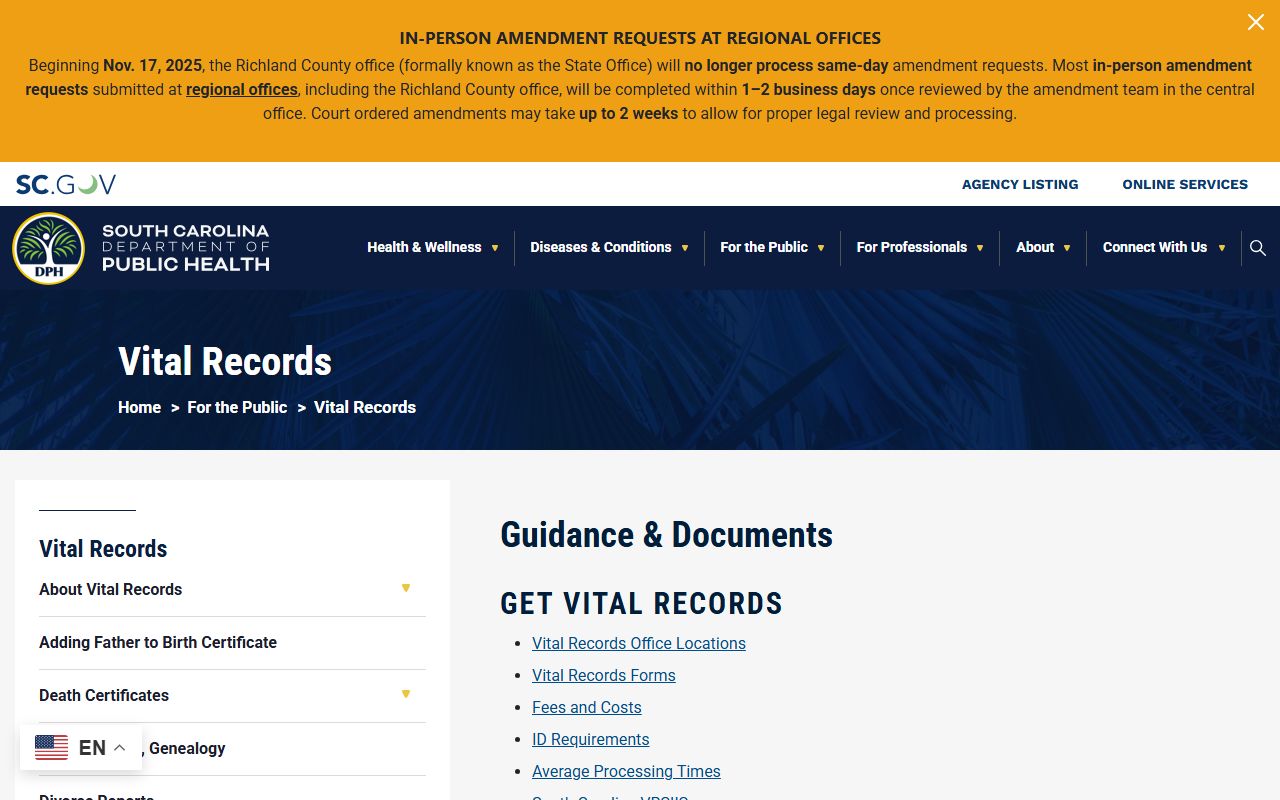
DPH can be relevant to death certificates or vital-record proof, but Probate Court remains the estate-record office.
Anderson Probate Court Contact
Use the Probate Court office for estate openings, original wills, guardianship and conservatorship petitions, probate forms, public record questions, and certified probate copies. Use the written request details above when a record cannot be located online or when a certified copy is needed.
Anderson County Probate Court
100 South Main Street
Anderson, SC 29624
Mailing: PO Box 8002, Anderson, SC 29622
864-260-4049
Email: probate@andersoncountysc.org
Fax: 864-260-4811
Monday-Friday, 8:30 a.m.-5:00 p.m.