
Anderson County Criminal Court Records
A criminal court record is the case file kept by the court after charges are filed or transferred into court. In Anderson County, the Clerk of Court is the custodian for General Sessions criminal proceedings in Circuit Court. General Sessions records can include indictments, warrants after transfer, charges, bonds, pleas, docket events, dispositions, sentencing orders, probation terms, and restitution terms where those items are publicly filed. The court record is different from a booking record held by the Sheriff's Office and different from a criminal-history report issued by SLED.
South Carolina Circuit Court is the state's general-jurisdiction trial court. It has the Court of Common Pleas for civil cases and the Court of General Sessions for criminal cases. Anderson County is in the 10th Judicial Circuit with Oconee County. Magistrate Court and Municipal Court also create criminal court records for lower-level cases, bond, preliminary hearings, warrants, traffic, and ordinance matters. A felony case or serious criminal case may begin with law enforcement or a lower-court event, then proceed through General Sessions.
The court charge path is narrower than the full case file. For the charging document, charge code, amended charge, reduced charge, or dismissed charge itself, use the dedicated Anderson County arrest records and court charges page. For civil, family, probate, and other case types, use the broader Anderson County court records page.
The manifest source for the 10th Circuit Solicitor identifies the prosecutor for Anderson County General Sessions matters.
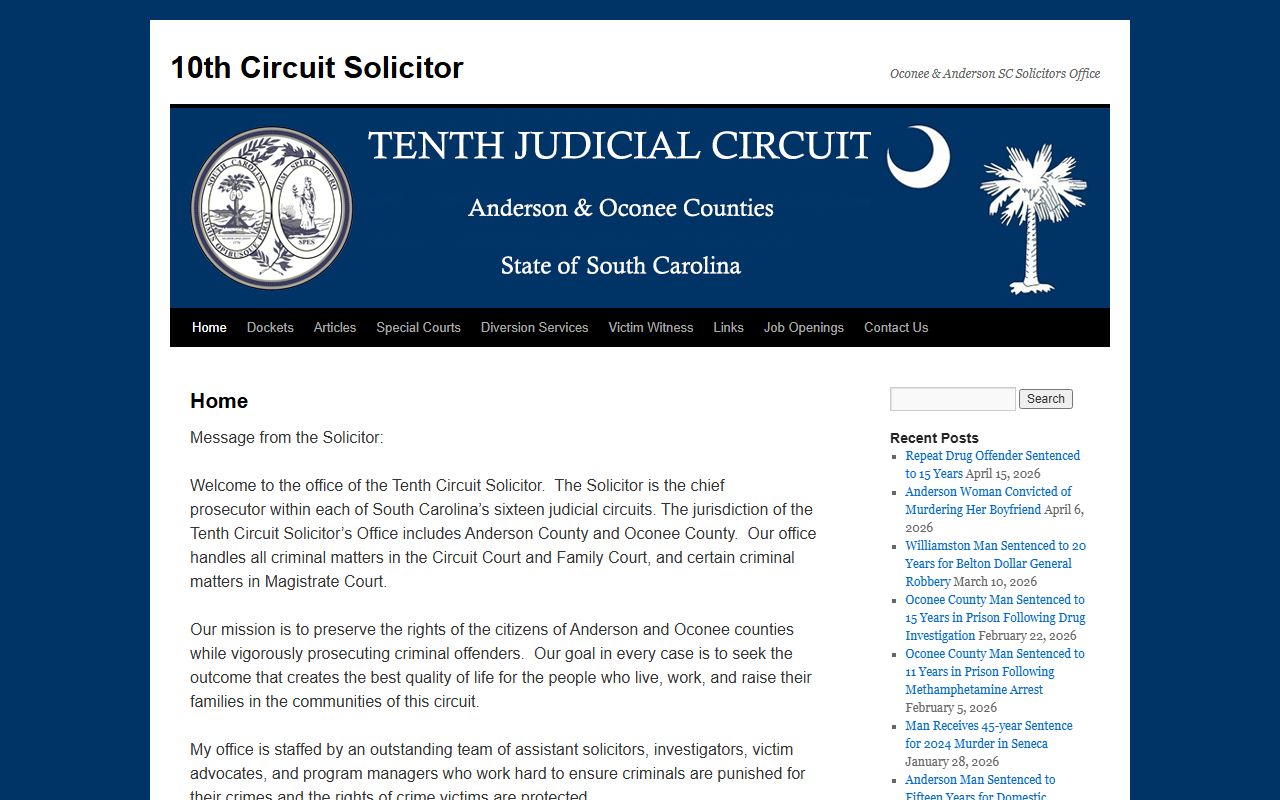
The Solicitor prosecutes cases, while the Clerk of Court maintains the filed court record and public case access path.
Search Anderson County Criminal Court Records
The main online channel is the Anderson County Public Index, reached directly or through the South Carolina Judicial Branch Case Records Search. For criminal court records, search the Circuit Court and General Sessions path when the matter has reached the county's main criminal trial court. The Judicial Branch notes that cookies and JavaScript must be enabled and that some browsers need pop-up exceptions for case detail.
- Open the Anderson County Public Index or the statewide Case Records Search page.
- Select Anderson County and the criminal court level or case type that fits the matter.
- Search by case number first, or use defendant name with date and court filters.
- Open the case detail to review actions, docket entries, bond, plea, disposition, and financial tabs when available.
- Request certified copies, older files, or non-online document access from the Anderson County Clerk of Court.
Lower-level criminal matters may remain in Magistrate or Municipal Court. Anderson Municipal Court lists criminal court at 10 a.m. Monday-Thursday and bond court at 8 a.m. and 4 p.m. daily for people arrested in the City of Anderson. Magistrates handle county criminal, bond, preliminary hearing, arrest-warrant, search-warrant, bench-warrant, traffic, and certain protective-order work. If Public Index does not show the expected Anderson County criminal court record, confirm the issuing agency and the court that heard the case.
The manifest source for the 10th Circuit Solicitor links page connects criminal court users to inmate search, Clerk case records, sheriff resources, and expungement information.
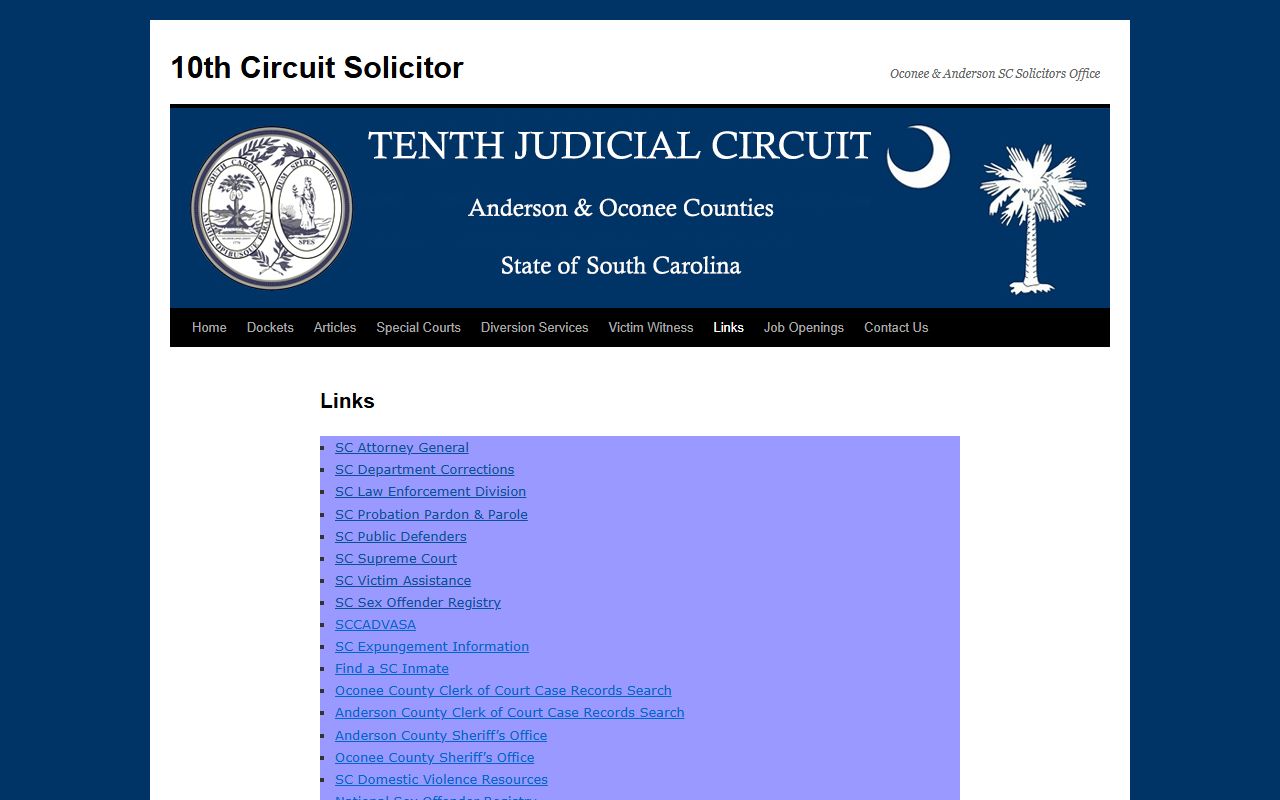
Those links show why criminal case access may require both court-record and prosecution-resource channels.
Anderson County Criminal Case Stages
Criminal court records are easiest to read when each docket entry is tied to the case stage. A charge or indictment starts the court case. An arraignment addresses the charges and plea. Pretrial entries may include bond, motions, continuances, discovery, diversion, or hearings. A case then reaches a plea, trial, dismissal, or other disposition. If there is a conviction or guilty plea, the record may also show sentencing terms, probation, fines, assessments, costs, or restitution.
Case flow: Charges Filed › Arraignment › Pretrial / Motions › Plea or Trial › Disposition › Sentencing
| Stage | What Happens |
|---|---|
| Charges Filed | The accusation enters the court record through a warrant, ticket, indictment, complaint, or other charging document. |
| Arraignment | The defendant is advised of the charge and the plea or next setting is addressed. |
| Pretrial / Motions | The docket may show bond, continuances, motions, hearings, diversion screening, or negotiated case activity. |
| Plea or Trial | The case may resolve by guilty plea, trial verdict, dismissal, or other court-approved outcome. |
| Disposition | The court records the outcome, such as guilty, not guilty, dismissed, nolle prosequi, or other final action. |
| Sentencing | The record may show jail or prison time, probation, fines, costs, assessments, restitution, or suspended terms. |
What Anderson Criminal Records Show
Anderson County criminal court records can include both identifiers and case movement. The public record may show the case number, court, agency, defendant, attorney, judge, case type, charge text, statute or citation, offense date, arresting agency, bond amount, bond type, warrant number, docket actions, hearings, plea, disposition, sentence, probation, and restitution. Some fields are not shown in every case. Some tabs or document images may not be enabled, and the Judicial Branch guide notes that image availability varies.
| Field | What It Shows |
|---|---|
| Case Number | The General Sessions, Magistrate, or Municipal case number tied to the court file. |
| Defendant | The person accused in the criminal court case, with public identifiers only where allowed. |
| Agency | The law-enforcement agency or prosecuting context tied to the filed charge. |
| Charges | Filed offenses, statute or citation references, severity, offense date, and charge status when public. |
| Bond | Bond amount, type, release conditions, or bond-hearing action where published. |
| Docket Actions | Hearings, motions, continuances, pleas, bench warrants, orders, dispositions, and sentence entries. |
| Plea | The defendant's formal response, such as guilty, not guilty, or nolo contendere if recorded. |
| Disposition | The case outcome, including conviction, dismissal, acquittal, nolle prosequi, or other closing entry. |
| Sentence | Jail or prison time, probation, fines, costs, assessments, restitution, or suspended sentence terms. |
Anderson Charges vs Convictions
A charge is an accusation filed into the court process. A conviction is the outcome after a guilty plea, guilty verdict, or other finding of guilt. Anderson County criminal court records can show charges that were amended, reduced, dropped, dismissed, resolved by diversion, or ended in acquittal. That is why the disposition field matters. A person should not treat every charge line as a conviction without reading the final outcome and sentence entries.
| Point | Charge | Conviction |
|---|---|---|
| Meaning | An accusation filed by warrant, ticket, indictment, complaint, or related charging paper. | A finding or plea of guilt entered by the court. |
| Record Stage | Appears early and may change before final outcome. | Appears at disposition and sentencing. |
| Possible Result | Can be dismissed, reduced, amended, or not prosecuted. | Can lead to sentence, probation, fines, costs, or restitution. |
| Search Caution | Read the docket and disposition before drawing conclusions. | Confirm whether the conviction remains public, sealed, or expunged. |
The manifest source for the 10th Circuit Solicitor contact page identifies local prosecution contacts for Anderson County criminal matters.
The Solicitor's Office is relevant to prosecution programs and expungement routing, while the court file remains with the proper court office.
Public Access to Anderson Criminal Records
Ordinary adult criminal court records in Anderson County are generally searched through Public Index or requested from the Clerk of Court, but access is not controlled by one rule alone. S.C. Code Section 30-4-30 gives a right to inspect, copy, or receive public records unless an exemption or other law applies. Judicial records use Rule 610, SCACR. Public Index and court sites also warn that public-access information may not be used for commercial solicitation.
Law-enforcement records are separate from court records. A Sheriff's Office booking report, incident report, or arrest-side document may require the Anderson County Sheriff's Office FOIA channel. A court record, certified copy, or General Sessions docket question goes to the Clerk of Court. A criminal-history report is a separate statewide channel through SLED CATCH, and SLED notes that wanted-person information is not included in CATCH. A court disposition should be checked against the actual Anderson County criminal court record before relying on a background summary.
Note: Public Index is a court access tool, not a certified background check or a substitute for the court file.
Defense Records and Court Help
The Anderson County Public Defender is relevant when a defendant cannot afford counsel and qualifies for appointed representation. The research file notes a Public Defender application processing fee handled through the Clerk's office, with a $40 fee referenced in official Anderson County sources. The Public Defender page and the South Carolina Commission on Indigent Defense Anderson County roster are not criminal court record databases, but they are tied to criminal case handling and can affect docket entries, attorney information, and hearing preparation.
The manifest source for the Anderson County public defender roster shows the official indigent-defense contact path.
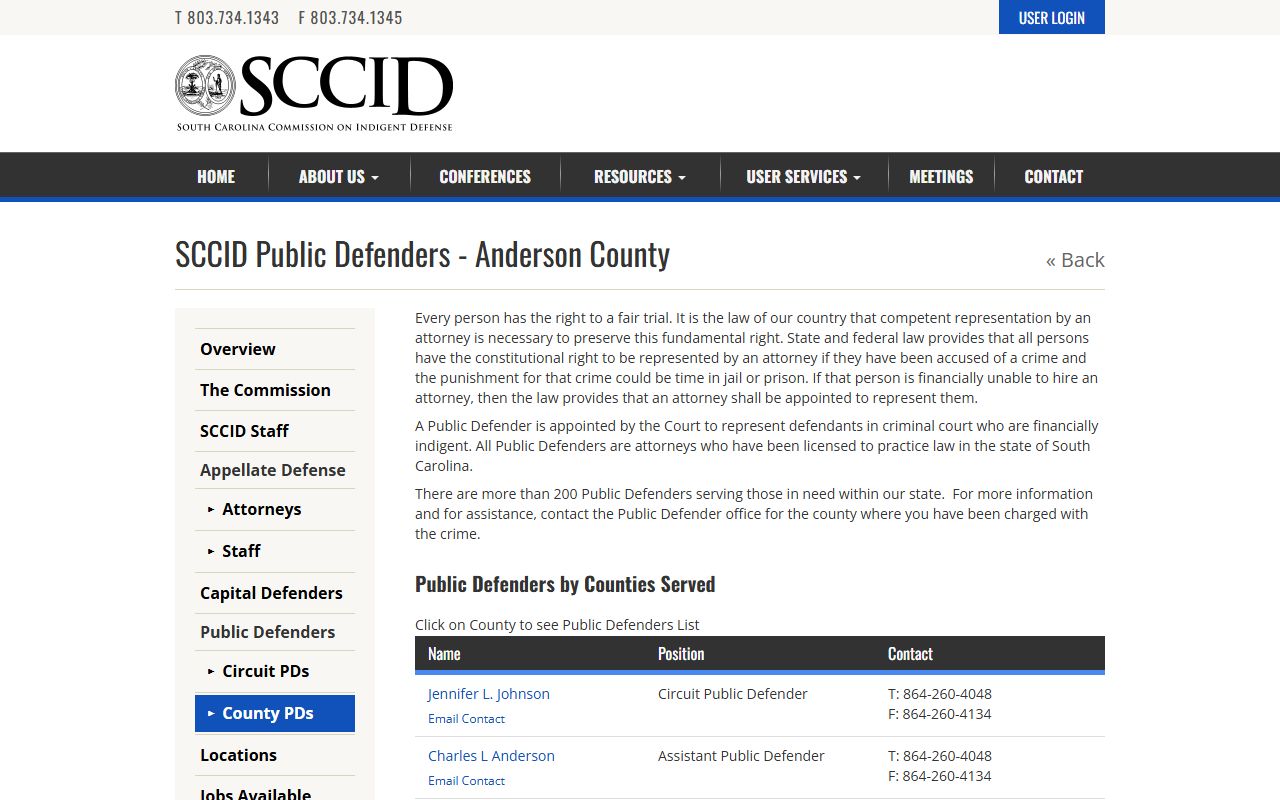
Public defender information helps explain representation in the criminal court record, but case filings and dispositions are still checked through court channels.
Sealed and Expunged Criminal Records
South Carolina routes many criminal expungement applications through the solicitor's office under S.C. Code Section 17-22-910. For Anderson County, that means the 10th Circuit Solicitor. A person should first identify the exact case, charge, disposition, court, and date. Non-convictions, dismissed charges, not-guilty verdicts, some first-offense summary-court convictions, conditional discharges, and certain youthful-offender or drug-related categories may qualify, but eligibility depends on statute and criminal history.
| Point | Sealed | Expunged |
|---|---|---|
| Public View | Closed from ordinary public access by court order or rule. | Removed from ordinary public criminal-history visibility after the order is completed. |
| Record Status | The record may still exist with limited authorized access. | The order directs agencies to destroy or remove covered arrest and court records from public access. |
| Route | Depends on the court order, case type, and restriction. | Many applications are administered through the Solicitor's Office. |
| Practical Step | Ask the Clerk about access or petition requirements. | Keep certified copies of the signed expungement order and follow up with named agencies. |
The manifest source for the South Carolina expungement process provides the Judicial Branch path for eligible criminal record removal.
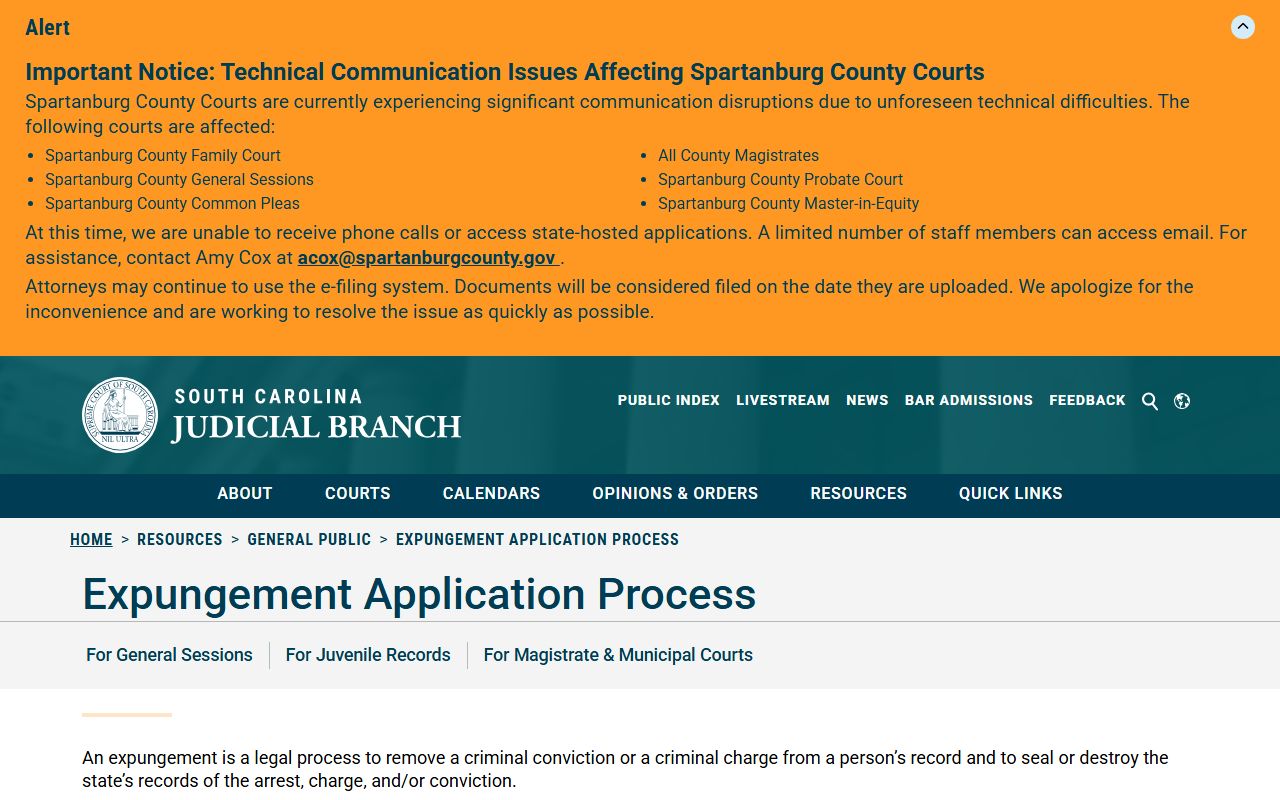
Expungement is a legal process, not an online delete request, and the agencies named in the order may update on different timelines.
The manifest source for the South Carolina criminal expungement statutes supports the statutory route used for Anderson County criminal records.
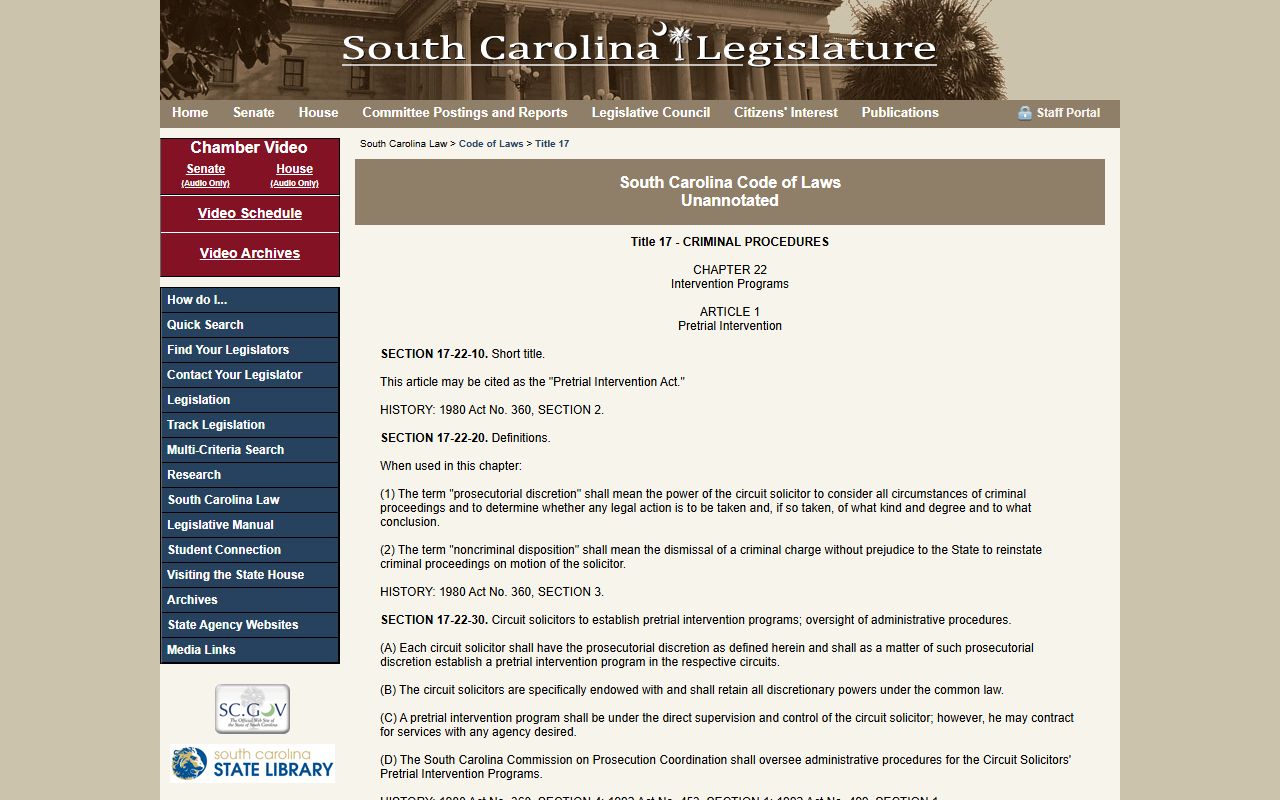
The statute source is important because eligibility depends on the exact charge, disposition, prior record, and category listed in South Carolina law.
Restricted Anderson Criminal Court Records
Juvenile records are the clearest criminal-related restriction. Family Court generally has juvenile jurisdiction for minors under 17 alleged to have violated state law or a municipal ordinance, and S.C. Code Section 63-19-2010 makes juvenile court records confidential except by court order to persons with a legitimate interest and certain legal exceptions. Section 63-19-2030 also makes juvenile law-enforcement records confidential and separate from adult records.
Other restrictions can apply to sealed cases, expunged matters, ongoing investigative records, law-enforcement exemptions, victim-sensitive material, and personal identifying information. Rule 41.2 requires redaction of Social Security numbers, taxpayer IDs, driver's license numbers, passport numbers, financial account numbers, PINs, passwords, minor identifiers, and certain home addresses. A missing online result does not always mean there was no case. It may mean the case is restricted, held by another court, too old for online access, or not yet reflected in the public system.
Important: Do not use public criminal court lookups for FCRA-regulated employment, credit, tenant, or insurance screening.