
Anderson County Arrest Records and Charges
Anderson County arrest records are created by law-enforcement and detention activity. They can show an arresting agency, arrest date, booking status, hold reason, bond information, and whether the person is in Anderson County Detention Center custody. The Anderson County Sheriff's Office operates the detention center and publishes a Zuercher roster for current and recent detainees. That custody record is not the same as the court charge record. It is the arrest and jail side of the event.
Court charges after arrest are tracked through the court system. In South Carolina, the elected prosecutor is the Solicitor. Anderson County is in the 10th Judicial Circuit, and the 10th Circuit Solicitor handles criminal prosecutions in Circuit Court and certain criminal matters in Magistrate and Family Court. The Clerk of Court keeps General Sessions criminal records after charges reach Circuit Court. For custody and booking detail, use the Anderson County inmate roster. For the full case file, pleas, dispositions, and sentencing, use the Anderson County criminal court records path.
The Anderson County Sheriff's Office agency directory identifies the law-enforcement contacts behind arrest, records, warrant, and detention questions.
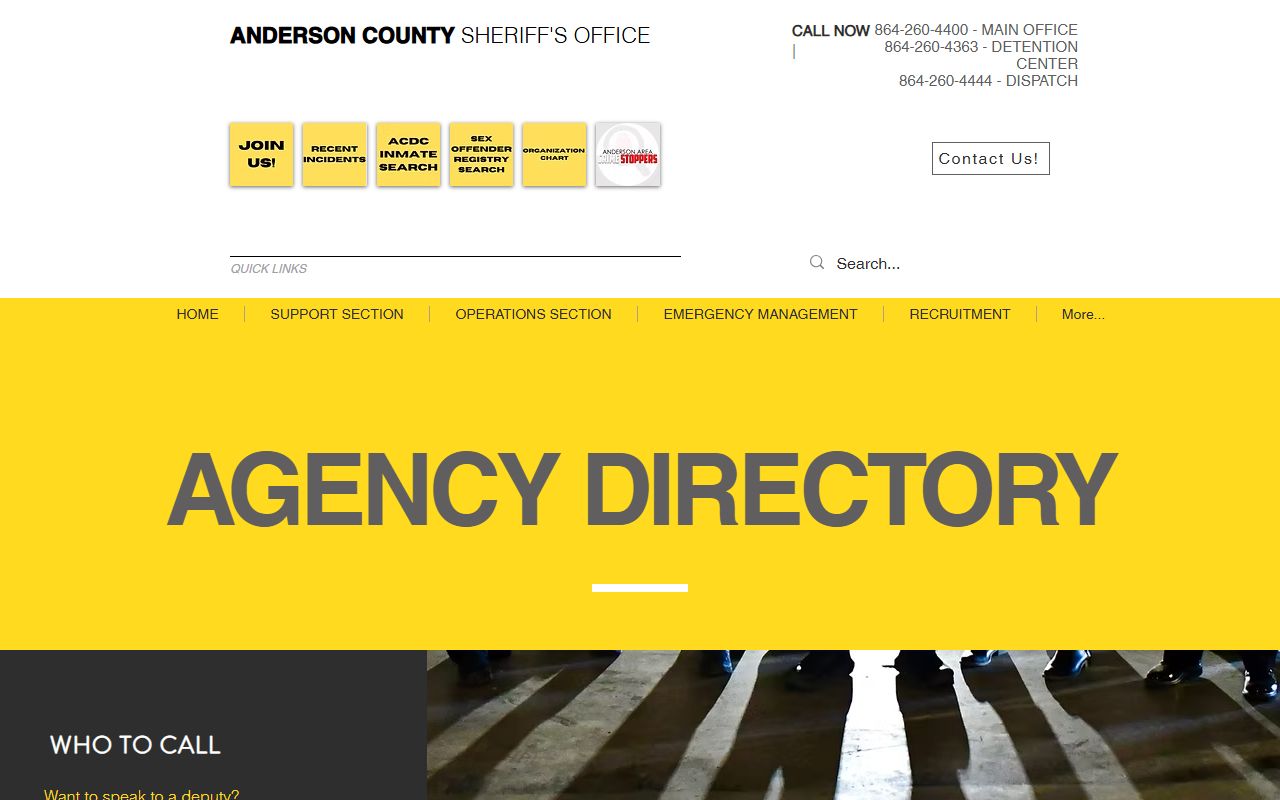
The directory matters because arrest records may route to Records, Detention, Warrants, or dispatch depending on whether the request concerns a report, a booking, or a pending court charge.
Find Anderson County Arrest Records
A practical Anderson County arrest records search starts with the source that created the record. Detention status and hold reasons come from the Sheriff's Office Zuercher inmate portal. Criminal charges filed in court are searched through the South Carolina Judicial Branch Public Index for Anderson County. General Sessions felony and higher-level misdemeanor case records are Clerk of Court records. Magistrate and participating municipal cases may also appear through Public Index, while some city matters require the municipal court or police booking office.
- Open the Anderson Sheriff's Office inmate search for current or recent custody and booking status.
- Open the Anderson County Public Index for court charges, case numbers, docket events, and dispositions.
- Search by defendant name or case number, then narrow by court type when the portal allows it.
- Review charge text, statute code, bond entries, warrant numbers, and action history before treating the record as complete.
- Contact the Clerk of Court, Solicitor, Sheriff's Office, Magistrate Court, or Municipal Court if the online path does not show the record.
State-level criminal-history access is different. SLED CATCH is a paid name-based criminal-history portal. Research notes it costs $25 plus a $1 online convenience fee and requires last name, first name, and date of birth matching. It is useful for statewide criminal-history context, but it is not an active warrant search and should not replace the local court or sheriff channels.
The Sheriff's Office FOIA request page is the written-request fallback for law-enforcement records that are not displayed in a court case file.
FOIA is most useful when the requested material is an incident report, arrest report, or sheriff administrative record rather than a filed Circuit Court document.
Anderson County Charges After Arrest
The arrest is only the start. A charge record begins when law enforcement or the prosecutor moves the allegation into a court channel. Magistrates in Anderson County issue arrest warrants, search warrants, and bench warrants, set bonds, and hold preliminary hearings. Anderson Municipal Court judges may issue arrest and search warrants for City of Anderson matters. More serious criminal cases move to General Sessions in Circuit Court, where the 10th Circuit Solicitor prosecutes the case and the Clerk of Court maintains the filed record.
| Charging Document | Who Uses It | What It Means in Anderson County |
|---|---|---|
| Complaint or ticket | Law enforcement or summary court | Often starts traffic, ordinance, misdemeanor, or lower-court criminal matters. |
| Warrant or affidavit | Magistrate or municipal judge | Can support arrest, search, bond, or court appearance requirements. |
| Indictment | Grand Jury and Solicitor | Formal General Sessions charge for prosecution in Circuit Court. |
The ACSO Detention Bureau describes the jail role after arrests and before court outcomes are final.
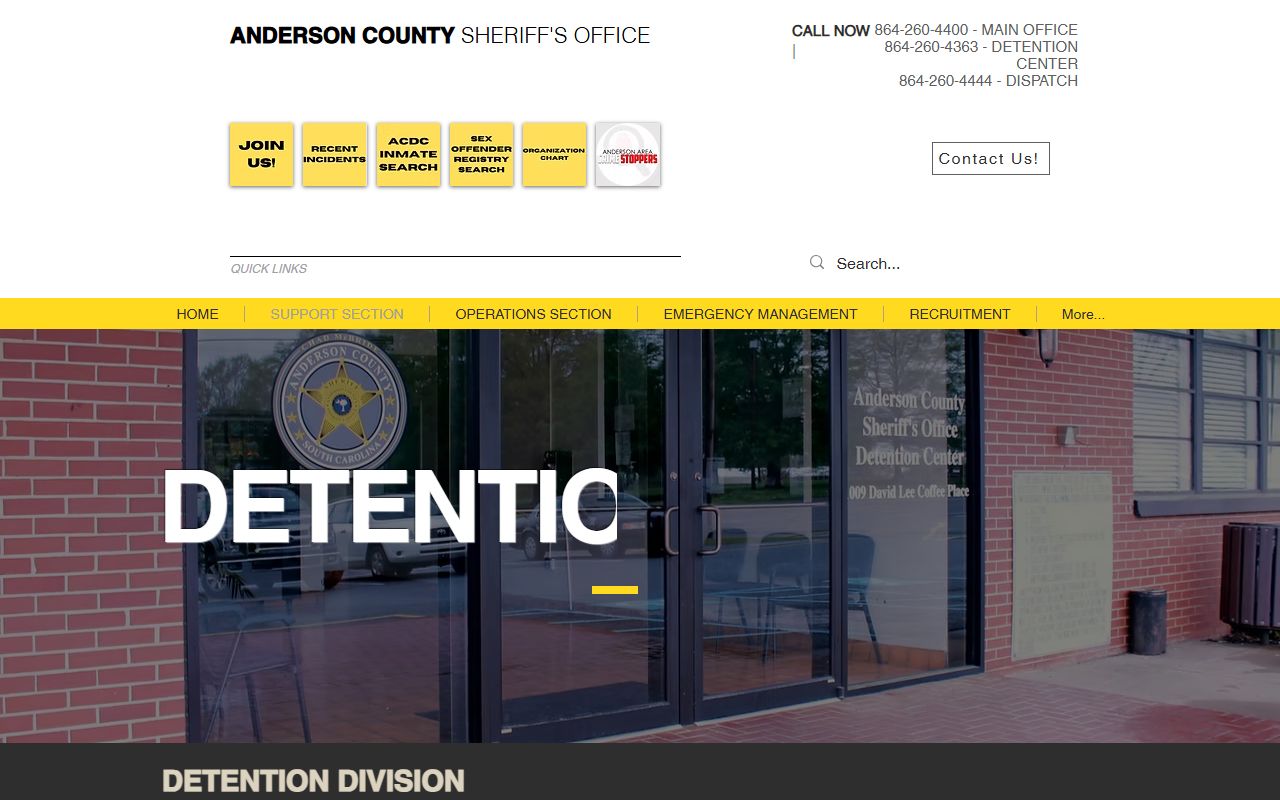
Detention data can identify hold reasons and bond, but the court record is still needed to verify filed charges and later case status.
Anderson County Charge Status
Charge status changes as the case moves. One arrest can produce several charges, and each charge can move on its own path. A charge may be pending while a hearing is set, amended by the prosecutor, reduced as part of a plea, dismissed by the court, or ended by nolle prosequi when the Solicitor does not continue prosecution. Public Index docket actions and the Clerk of Court record should be read together because a charge list alone may not show the final outcome.
| Status | Meaning | Where to Check |
|---|---|---|
| Pending | The charge is open and no final disposition appears yet. | Public Index, court roster, Clerk of Court. |
| Amended or reduced | The accusation changed in charge text, level, count, or statute. | Case actions, solicitor filings, court orders. |
| Dismissed | The charge ended without a conviction on that count. | Disposition entry and signed order if available. |
| Nolle prosequi | The prosecutor elected not to proceed on that charge. | General Sessions docket and solicitor-related entries. |
Note: A jail hold reason may lag behind court action, so verify charge status with the issuing court or Clerk of Court.
Anderson County Charges vs Convictions
A charge is an accusation. A conviction is a final outcome after a guilty plea, verdict, or other finding of guilt. Anderson County arrest records, jail hold reasons, and court charges may appear before any conviction exists. For that reason, court charge records should be read with the docket, disposition, and sentencing entries. A dismissed charge, acquittal, or successful diversion result is not the same as a conviction.
| Point of Comparison | Charge | Conviction |
|---|---|---|
| Stage | Filed after arrest or by charging document. | Entered after plea, verdict, or court finding. |
| Proof level | Based on probable cause or formal accusation. | Requires guilt established through court process. |
| Record value | Shows what was alleged and how the case began. | Shows the final criminal outcome for that count. |
Anderson County Solicitor Charge Role
The 10th Circuit Solicitor is the chief prosecutor for Anderson and Oconee Counties. The office handles criminal matters in Circuit Court and Family Court and certain criminal matters in Magistrate Court. Solicitor materials identify the Anderson office at the courthouse, with the main office on the first floor and Diversion on the second floor. The office also publishes diversion programs, including Pre-Trial Intervention, Alcohol Education Program, Traffic Education Program, Drug Court, Mental Health Court, and Victim Witness resources.
The Anderson Police Department provides city police contact and booking-office routing for City of Anderson arrest, charge, and release-date questions.

City arrests can require a different first call than county sheriff arrests, especially when the matter began with Anderson Police and Anderson Municipal Court.
State Charge and History Checks
South Carolina court charges are local court records first. State criminal-history checks are a separate channel. SLED CATCH can return state criminal-history information based on name and date of birth, but research for Anderson County specifically notes that wanted-person information is not included in a CATCH report. A CATCH result should not be used to decide whether an active warrant exists. It also should not be treated as a substitute for certified court records from the Clerk of Court.
The SLED CATCH criminal-history portal is the official statewide channel documented for name-based criminal-history access.
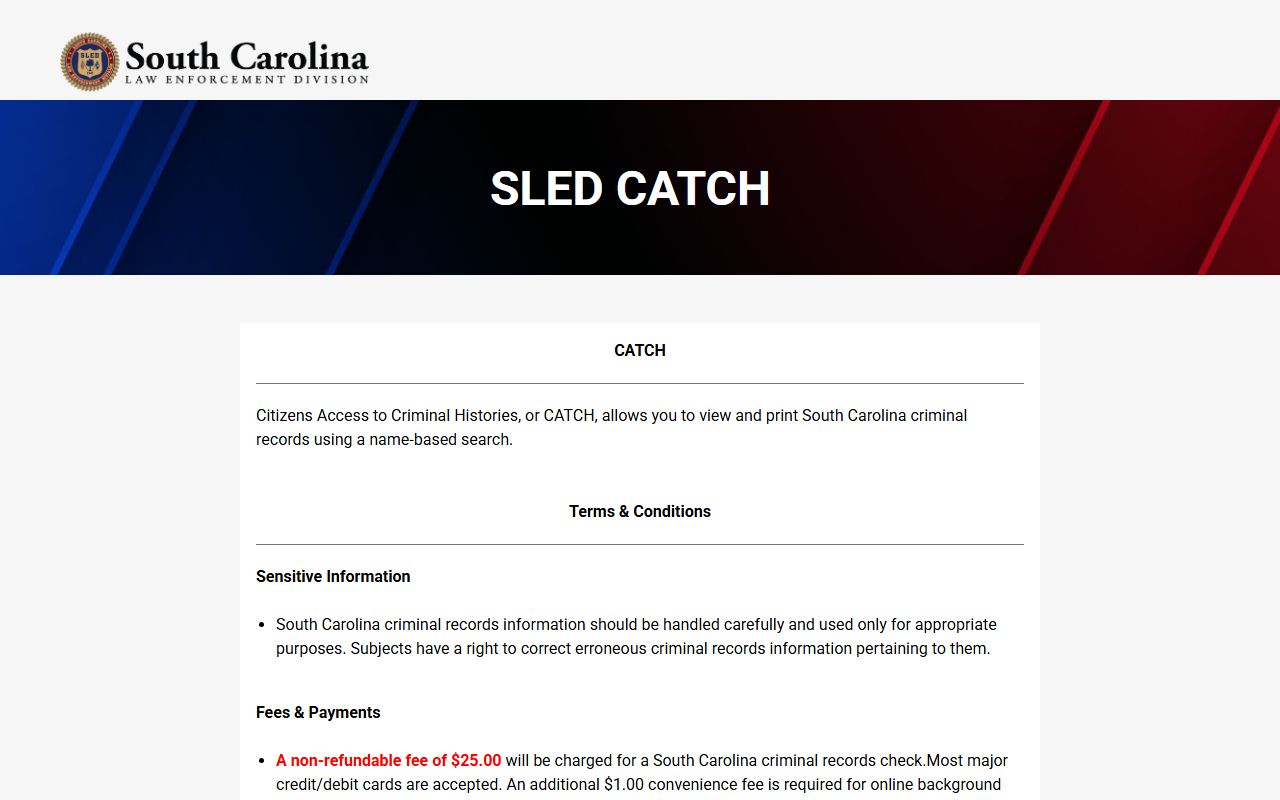
Use CATCH for statewide criminal-history context, then use Anderson County courts to verify charge status, disposition, and certified records.
Restricted Anderson County Charge Records
Public access has limits. South Carolina FOIA gives a person the right to inspect or receive public records unless an exemption or another law applies. Court records also use Rule 610 for judicial-record requests and Rule 41.2 for redaction of personal identifying information. Juvenile court records are confidential under S.C. Code Section 63-19-2010, and juvenile law-enforcement records are kept separate from adult records under Section 63-19-2030. Sealed and expunged charges should not be treated like ordinary open case records.
| Record Type | Public Access Effect | Anderson County Channel |
|---|---|---|
| Sealed record | Closed from ordinary public view by court order. | Clerk of Court or issuing court. |
| Expunged record | Removed from ordinary public criminal-history access after the order is completed. | 10th Circuit Solicitor expungement process. |
| Juvenile matter | Confidential unless a court order or statute allows access. | Family Court or authorized legal channel. |
Important: Arrest and charge records must not be used for credit, housing, employment, insurance, or other FCRA-regulated screening from this site.